
AFFILIATE DISCLOSURE
As an Amazon Associate I earn from qualifying purchases. This article contains affiliate links.
Read our full disclosure.
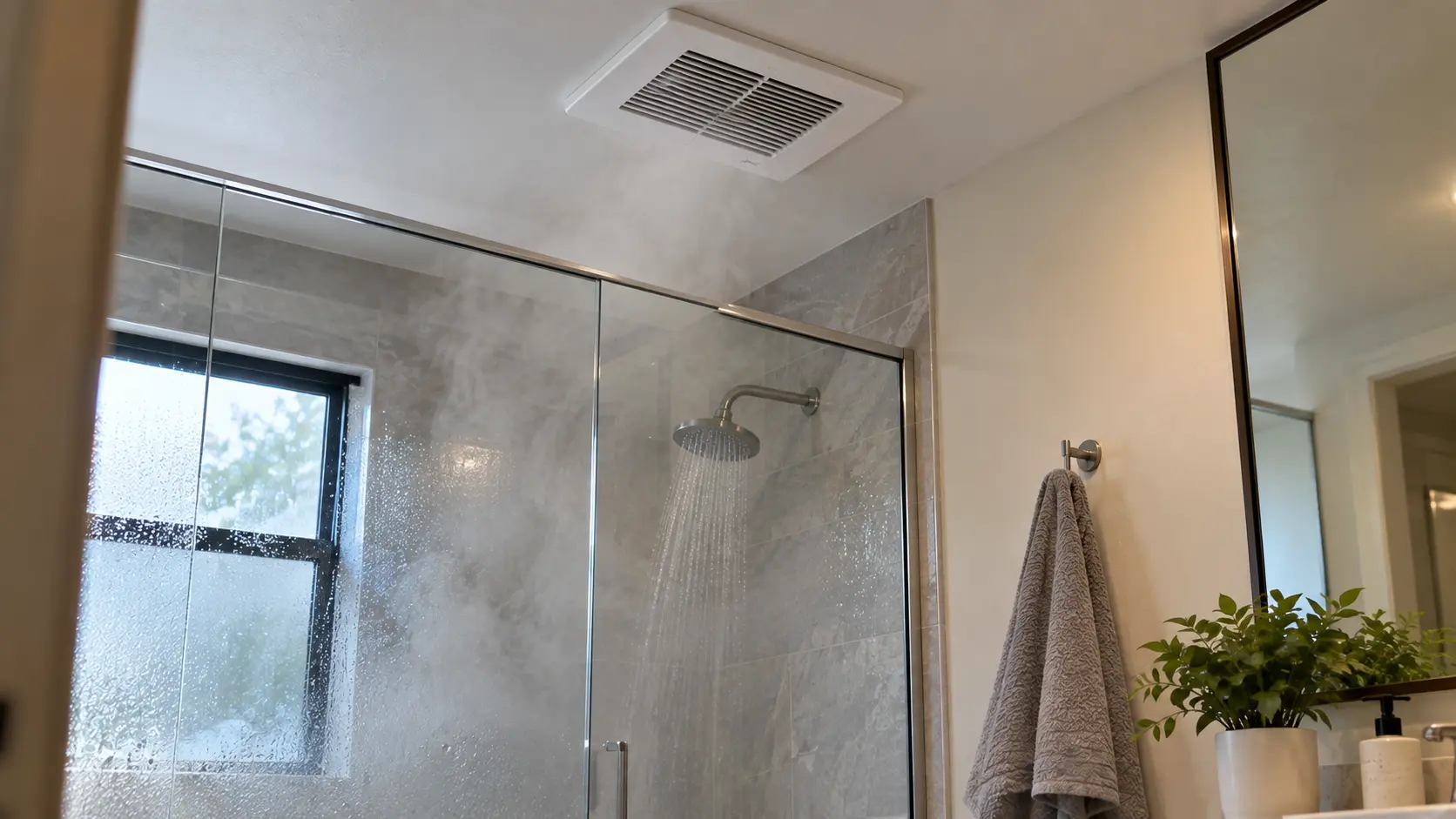
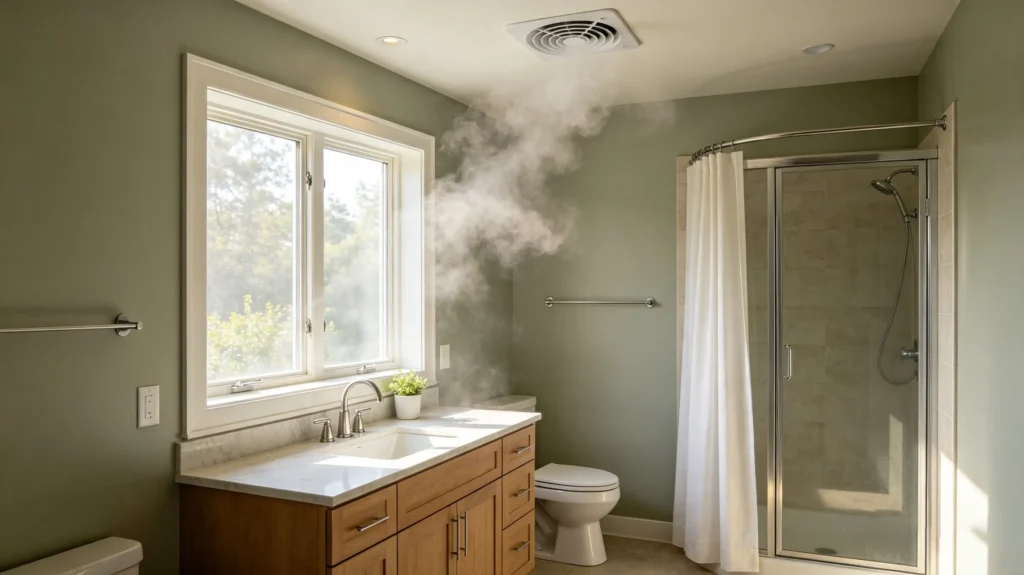
A bathroom exhaust fan should do much more than make noise after a shower. The right model pulls out steam, helps control odors, reduces lingering moisture, and keeps the room more comfortable for everyone who uses it.
For this guide, I compared popular bathroom exhaust fans from Panasonic, Broan-NuTone, and Delta Breez, looking beyond headline airflow numbers. I focused on CFM performance, noise ratings, humidity-sensing features, installation flexibility, energy efficiency, lighting, smart-style extras, and overall value.
I also paid attention to real household situations: compact guest bathrooms, busy family bathrooms, bathrooms beside bedrooms, cold spaces that need a heater, and renovation projects where one fixture may need to handle ventilation, lighting, and audio.
Quick Picks: The Best Bathroom Exhaust Fans
| Award | Product | Best for | Key reason to choose it |
|---|---|---|---|
| Best overall | Panasonic WhisperChoice RG-C811LHA | Most standard and primary bathrooms | Quiet 80/110 CFM airflow, humidity sensing, and integrated LED lighting |
| Best budget | Broan-NuTone InVent AE80B | Small and medium bathrooms | Simple 80-CFM ventilation without unnecessary extras |
| Best for automatic moisture control | Broan-NuTone Roomside BES8 | Humid climates and busy households | Built-in humidity sensing and room-side installation |
| Best for quiet operation | Panasonic WhisperChoice RG-C811A | Bedrooms, nurseries, and home offices | Selectable 80/110 CFM airflow with approximately 0.3–0.5 sones |
| Best for larger bathrooms | Broan-NuTone AER110K | Primary bathrooms and larger shower areas | 110 CFM airflow, 1.0-sone operation, and ENERGY STAR certification |
| Best with heater | Broan-NuTone PowerHeat BHF110 | Cold bathrooms and winter climates | Combines 110 CFM ventilation with a 1,500-watt heater |
| Best smart-style upgrade | Broan-NuTone SPKN80L | Modern bathroom renovations | Combines ventilation, adjustable LED lighting, and Bluetooth audio |
The Panasonic WhisperChoice RG-C811LHA stands out as the most complete option for shoppers who want quiet operation, flexible airflow, automatic moisture control, and built-in lighting. Its ENERGY STAR listing specifies selectable 80- and 110-CFM airflow, LED lighting, and a sound range of approximately 0.2–0.5 sones.
For a simpler replacement, the Broan-NuTone InVent AE80B is the better value-oriented choice. If automatic moisture control is your top priority, the Broan-NuTone Roomside BES8 adds humidity sensing to its 80-CFM design.
The right pick ultimately depends on your bathroom, not just the product’s feature list. A small powder room may need only a basic 50- or 80-CFM fan, while a large primary bathroom, humid climate, or long duct run may benefit from higher airflow and automatic controls.
AFFILIATE DISCLOSURE
As an Amazon Associate I earn from qualifying purchases. This article contains affiliate links.
Read our full disclosure.
The 7 Best Bathroom Exhaust Fans
1. Best Overall: Panasonic WhisperChoice RG-C811LHA
Best for: Most standard and primary bathrooms, households that want automatic moisture control, and bathroom renovations that need integrated lighting.
Product overview
The Panasonic WhisperChoice RG-C811LHA is the most complete all-around bathroom exhaust fan in this lineup. It combines selectable 80/110 CFM airflow with built-in humidity sensing, integrated LED lighting, and a quiet DC motor.
That mix makes it a particularly practical choice for a primary bathroom or a busy household. You can adjust the airflow to match the room, let the humidity sensor respond after showers, and use the integrated light without adding another ceiling fixture. Panasonic’s ENERGY STAR listing identifies the model as a bathroom or utility-room ventilating fan with LED lighting and selectable airflow
Key features
- Selectable 80/110 CFM airflow.
- Built-in humidity-sensing operation.
- Integrated LED light.
- Quiet DC motor.
- 4- or 6-inch duct compatibility, depending on the installation configuration.
- Designed for bathrooms up to approximately 110 square feet.
- ENERGY STAR certification listed for the model.
Real-world impressions
The selectable airflow is the feature I appreciate most for everyday use. An 80-CFM setting makes sense for a smaller bathroom or a lightly used guest bath, while 110 CFM gives you more capacity for a larger primary bathroom, a powerful shower, or a room that fills with steam quickly.
Automatic humidity sensing is equally useful in a busy home. Instead of relying on children, guests, or a distracted adult to turn on the fan—and remember to leave it running—the sensor can respond when moisture levels rise. That makes the RG-C811LHA a better fit for households where ventilation often gets forgotten.
The integrated LED light is another advantage during a renovation. It may allow the fan to take the place of a separate ceiling light, which can simplify the look of the room and reduce the number of fixtures overhead. The listed light output is 736 lumens with a 3000K color temperature.
I would still plan the wiring before buying. If you want the light, fan, and humidity-sensing function to operate independently, the installation may require more wiring than a basic fan replacement. The fan’s performance will also depend heavily on the ductwork. A crushed flex duct, undersized run, or excessive number of bends can limit airflow no matter how impressive the motor’s specifications look.
Notable drawbacks
- Costs more than a basic single-speed bathroom fan.
- Wiring and sensor setup can be more involved than a simple replacement.
- The exact duct configuration should be confirmed before purchase.
- Integrated lighting is convenient, but replacing a separate fixture may require electrical changes.
Overall, the Panasonic WhisperChoice RG-C811LHA is the model I would start with for most shoppers who want one bathroom fan to handle ventilation, moisture control, quiet operation, and lighting without feeling overly complicated.
2. Best Budget: Broan-NuTone InVent AE80B

Best for: Small and medium bathrooms, guest bathrooms, straightforward replacement projects, and shoppers who do not need smart features.
Product overview
The Broan-NuTone InVent AE80B is the kind of bathroom fan I’d recommend when you want dependable ventilation without paying for features you may never use. It focuses on the essentials: 80 CFM airflow, a single-speed motor, a 4-inch duct connection, and a relatively simple ceiling-mounted design.
Broan-NuTone lists the AE80B at 80 CFM and 1.5 sones, while current product specifications also identify its galvanized-steel housing, 4-inch duct, and lack of humidity or motion sensing.
Key features
- 80 CFM airflow.
- 4-inch duct connection.
- Approximately 1.5 sones.
- Single-speed operation.
- Ceiling-mounted design.
- Galvanized-steel housing.
- White polymer grille.
- Suitable for many bathrooms around 80 square feet, depending on the room layout and ductwork.
- Designed for straightforward replacement or new construction installation.
Real-world impressions
The AE80B makes the most sense in a hallway bathroom, guest bath, or standard family bathroom where the existing wiring and ductwork are already in place. Its 80-CFM output is a practical match for many small and medium bathrooms, particularly rooms in the 50-to-80-square-foot range.
What I like about this model is its restraint. There is no Bluetooth speaker, color-changing light, motion sensor, or complicated humidity-control interface to configure. If your only goal is to move shower moisture and odors outside, a simpler fan can be easier to purchase, install, and maintain.
At approximately 1.5 sones, it should sound noticeably more comfortable than many older builder-grade bathroom fans. It is not silent, but the noise level is reasonable for a guest bathroom or hallway bath. I would still consider a quieter model if the bathroom shares a wall with a bedroom, nursery, or home office, especially if you expect the fan to run for 20 minutes after every shower.
The galvanized-steel housing is another practical touch for a damp environment. Still, the fan’s real-world performance will depend on the installation. An 80-CFM rating assumes the ductwork can move air effectively; a long, narrow, crushed, or sharply bent duct run can make any bathroom fan less effective.
Notable drawbacks
- No built-in humidity sensor.
- No integrated light in the basic AE80B configuration.
- Single-speed operation provides less flexibility than selectable-CFM models.
- Less suitable for large bathrooms or rooms with restrictive duct runs.
- Noticeably louder than premium fans rated below 1.0 sone.
The Broan-NuTone InVent AE80B is not the most feature-packed option, and that is exactly the point. For a basic bathroom replacement, it delivers the core ventilation performance most shoppers need while avoiding the added cost and complexity of smart-style features.
3. Best for Automatic Moisture Control: Broan-NuTone Roomside BES8
Best for: Humid climates, children’s bathrooms, rental properties, and households where the fan switch is often forgotten.
Product overview
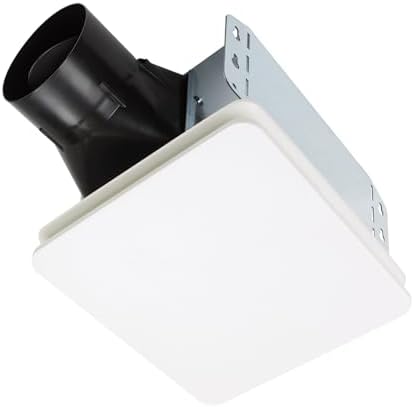
The Broan-NuTone Roomside BES8 is designed for shoppers who want ventilation to happen automatically. It combines 80 CFM airflow with built-in humidity sensing, allowing the fan to respond when moisture levels rise in the bathroom.
The humidity feature is adjustable, so the fan can activate when the room reaches the selected humidity condition and stop according to its timer setting. That makes it more useful than a basic fan for households where someone tends to switch the fan off immediately after a shower—or forget to turn it on at all.
Key features
- 80 CFM airflow.
- Built-in humidity sensing.
- Approximately 1.5 sones.
- ENERGY STAR certified.
- Room-side installation design.
- 4-inch duct connection.
- Recommended for rooms up to approximately 75 square feet.
- Three-year manufacturer warranty.
- Designed for continuous ventilation use.
Real-world impressions
The main reason I’d choose the BES8 is its automatic response to moisture. Bathroom fans are only helpful when they run long enough, and that does not always happen in a busy home. A child may turn the fan off because it is noisy, a guest may not know the switch exists, or someone may simply forget it after a morning shower.
The humidity sensor helps close that gap. When steam pushes the room’s humidity higher, the fan can switch on automatically rather than relying entirely on household habits. Broan-NuTone recommends running a bathroom fan during bathing and for about 20 minutes afterward, since moisture can remain in the air and on bathroom surfaces after the water is turned off.
That makes the BES8 especially appealing in humid climates, where bathrooms may take longer to dry and condensation can become a recurring problem. I also like it for children’s bathrooms and rental properties, where you may not be able to depend on every user following the same ventilation routine.
The room-side installation design is another practical advantage for retrofit projects. In suitable installations, it can allow more of the work to be completed from inside the bathroom instead of requiring extensive attic access. That can make replacement less disruptive, particularly when an old fan needs to be removed from a finished ceiling.
Room-side installation does not mean installation is plug-and-play, however. The fan still needs properly routed ductwork, a suitable exterior termination, and the correct electrical connections. A crushed duct or poorly vented run can undermine the fan’s performance, even when the humidity sensor is working correctly.
At 1.5 sones, the BES8 should be comfortable for many standard bathrooms, but it is not the quietest model in this guide. For a bathroom directly beside a bedroom, nursery, or home office, I would consider a quieter fan—or make sure the fan’s longer run time will not disturb anyone nearby.
Notable drawbacks
- 80 CFM may not be enough for a large primary bathroom or a room with a long, restrictive duct run.
- Humidity settings may need adjustment in naturally humid environments.
- Approximately 1.5 sones is reasonable, but not ideal for noise-sensitive spaces.
- Room-side installation simplifies access but does not eliminate electrical or ductwork requirements.
- The 4-inch duct connection should be checked against the existing ventilation system before purchase.
The Broan-NuTone Roomside BES8 is a smart practical upgrade rather than a flashy one. Its biggest benefit is consistency: it helps keep the fan running when people forget, which is exactly what many bathrooms need to stay drier and more comfortable.
4. Best for Quiet Operation: Panasonic WhisperChoice RG-C811A
Best for: Bathrooms beside bedrooms, nurseries, home offices, and shoppers who dislike the sound of a bathroom fan.
Product overview
The Panasonic WhisperChoice RG-C811A is the quiet-operation pick in this lineup. Its Pick-A-Flow design lets you choose between 80 and 110 CFM, while the DC motor operates at less than 0.3 sones at 80 CFM and approximately 0.5 sones at 110 CFM.
That low noise level matters more than it may seem. A fan that is unpleasantly loud is more likely to be switched off too soon—or skipped entirely. The RG-C811A is designed to fade into the background, making it easier to leave running while the bathroom dries.
Key features
- Selectable 80/110 CFM operation.
- Less than 0.3 sones at 80 CFM.
- Approximately 0.5 sones at 110 CFM.
- Energy-efficient DC motor.
- Flex-Z Fast installation bracket.
- 4- or 6-inch duct compatibility, depending on the configuration.
- Ceiling-mounted design.
- Fits some 2-by-8-inch construction spaces.
- Suitable for bathrooms up to approximately 110 square feet.
- Designed for continuous or intermittent operation.
Real-world impressions
The main advantage here is consistency. Bathroom ventilation works best when the fan runs during the shower and continues afterward, but that is much easier to do when the motor does not dominate the room. In a bathroom beside a bedroom, for example, I’d rather have a quiet fan that runs for 20 minutes than a loud one that gets switched off as soon as the shower ends.
The two airflow settings also make this model more flexible than a fixed-output fan. The 80-CFM setting is a sensible starting point for many average bathrooms, especially when minimizing sound is the priority. If the bathroom is larger, heavily used, or fills with steam quickly, switching to 110 CFM provides additional ventilation capacity.
The Flex-Z Fast bracket is helpful during installation because it gives the installer more flexibility when positioning the housing. The fan is also compatible with 4- or 6-inch ducting, depending on the setup, which can make it easier to work into an existing ventilation system.
That said, low noise does not make poor ductwork disappear. A crushed flex duct, restrictive termination, long run, or several sharp bends can reduce airflow and create turbulence. In some installations, the duct system—not the motor itself—is what causes the fan to sound louder than expected.
Notable drawbacks
- Does not include the same built-in humidity-sensing package as the Panasonic RG-C811LHA.
- Ductwork quality still affects both performance and sound.
- Installation requires more planning than a basic single-speed replacement fan.
- The 110-CFM setting is slightly louder than the 80-CFM setting.
- Integrated lighting is not included in this base configuration.
The Panasonic WhisperChoice RG-C811A is the fan I’d choose when quiet operation is the feature that will determine whether your household actually uses the fan properly. It is especially well suited to bathrooms near sleeping or work areas, where a few extra minutes of loud ventilation can quickly become irritating.
5. Best for Larger Bathrooms: Broan-NuTone AER110K

Best for: Primary bathrooms around 100 square feet, larger shower areas, frequent household use, and retrofit installations.
Product overview
The Broan-NuTone AER110K is the higher-capacity choice for shoppers who need more airflow without stepping up to a complicated fan with a heater, speaker, or elaborate control system. It delivers 110 CFM, runs at a listed 1.0 sone, and is designed for room-side installation.
It is also ENERGY STAR certified and includes Broan-NuTone’s CleanCover grille, which gives this otherwise practical fan a few useful upgrades without adding unnecessary electronics. Current specifications list a 4-inch duct, approximately 105 square feet of maximum coverage, room-side installation, and a one-year manufacturer warranty for the AER110K.
Key features
- 110 CFM airflow.
- 1.0-sone sound rating.
- ENERGY STAR certified.
- 4-inch duct connection.
- Room-side installation.
- CleanCover grille.
- Recommended for rooms around 105 square feet.
- Single-speed operation.
- Ceiling- or wall-installation capability, depending on the setup.
- UL listed for use over bathtubs or showers when connected to a GFCI circuit, according to the product specifications.
- Verify the current warranty terms before purchase, as listings may vary by model revision or seller.
Real-world impressions
The extra airflow is the main reason to choose the AER110K. A 110-CFM fan is useful in a primary bathroom with a large shower, frequent family use, or a layout where steam tends to collect before reaching the ceiling grille. It also gives you more ventilation capacity than an 80-CFM model when the room fills with steam quickly.
At 1.0 sone, the AER110K should be noticeably more comfortable than older builder-grade fans, although it is not as quiet as Panasonic models rated below 0.5 sones. For a bathroom near a bedroom, I would prioritize a quieter model. For a larger bathroom where airflow matters more than near-silent operation, this is a sensible balance.
The room-side installation design may reduce disruption during a replacement project. In a suitable retrofit, the installer can perform more of the work from inside the bathroom rather than relying entirely on attic access. That can be especially helpful when replacing an old fan in a finished home.
The CleanCover grille is a small but worthwhile maintenance convenience. Bathroom grilles collect dust, lint, and hair over time, so a cover designed to be easier to clean can help the fan maintain a neater appearance between deep cleanings.
I would still measure before ordering. Room-side installation does not mean the fan will fit every existing opening, and it does not eliminate the need to inspect the ductwork. The current housing dimensions are listed at approximately 9.25 by 10 by 5.75 inches, while the grille and ceiling opening require their own clearance checks. A 4-inch duct may also restrict performance in installations with long runs, multiple bends, or poor exterior termination.
Notable drawbacks
- No automatic humidity sensing in the standard AER110K model.
- A 4-inch duct may limit performance in some installations.
- Housing, grille, and ceiling-opening dimensions must be compared with the existing installation.
- Single-speed operation offers less flexibility than selectable-CFM models.
- Confirm the current warranty details for the exact unit before purchasing.
The Broan-NuTone AER110K is a strong fit when your bathroom needs more ventilation, but you do not want to pay for features unrelated to moisture removal. It is best viewed as a practical 110-CFM workhorse: powerful enough for many larger bathrooms, reasonably quiet, and retrofit-friendly when the existing duct and ceiling layout cooperate.
6. Best Bathroom Fan With Heater: Broan-NuTone PowerHeat BHF110

Best for: Cold bathrooms, winter climates, bathrooms with tile floors or exterior walls, and shoppers who want warmth after a shower.
Product overview
The Broan-NuTone PowerHeat BHF110 combines two useful bathroom upgrades in one ceiling fixture: a 110-CFM exhaust fan and a 1,500-watt heating element. It is designed for bathrooms where moisture removal matters, but stepping onto cold tile or leaving a warm shower is also part of the everyday experience.
Broan-NuTone rates the BHF110 at 2.0 sones and recommends it for rooms up to approximately 105 square feet. The manufacturer also lists a 4-inch duct, continuous-operation-rated motor, 2-by-6-inch ceiling compatibility, and a one-year warranty.
Key features
- 110 CFM ventilation.
- 1,500-watt heating element.
- 2.0-sone sound rating.
- 4-inch duct connection.
- Motor engineered for continuous operation.
- Large 17.75-by-11.75-inch grille.
- Galvanized-steel housing.
- UL listed.
- Two-position switch setup for separate fan and heater control.
- Suitable for bathrooms up to approximately 105 square feet.
- HVI-certified air and sound ratings.
Real-world impressions
The heater is the reason to choose this model. In a bathroom with tile floors, an exterior wall, limited central heating, or a drafty window, the BHF110 can make the room feel more comfortable before and after a shower. It is particularly appealing in colder climates, where a standard exhaust fan may remove moisture effectively but do nothing to make the space feel warmer.
The 1,500-watt heater is intended to provide noticeable heat quickly. I like the two-function design because it keeps the bathroom from needing a separate wall heater or portable heating appliance. The large grille also gives the unit a more substantial appearance than a small fan-only vent.
The 110 CFM exhaust capacity remains important. Heating the room does not replace ventilation, and the fan still needs to remove steam, odors, and moisture from the air. For a medium-to-large bathroom, that airflow should provide useful capacity, assuming the ductwork is properly sized and routed outdoors.
The BHF110 is rated at 2.0 sones, which is reasonably quiet for a fan-and-heater combination but not silent. In practice, that sound level may be acceptable in a bathroom where warmth is the priority. If the room shares a wall with a bedroom or home office, I would compare it with a quieter fan-only model before purchasing.
I would pay close attention to the electrical requirements. Broan-NuTone lists the unit at 1,500 watts, 120 volts, and 14 amps. That is substantially more demanding than a standard ventilation fan, so the existing circuit, wiring, switch arrangement, and local code requirements should be evaluated by a qualified electrician. The heater also makes installation more complex than simply replacing a basic exhaust fan.
Notable drawbacks
- Not ENERGY STAR certified.
- Higher operating cost when the heater is used frequently.
- More complicated wiring and installation than a fan-only model.
- Audible at 2.0 sones.
- Not designed for room-side installation, so attic access and ceiling conditions may affect the project.
- Verify local safety requirements before using it over a bathtub or shower; the manufacturer’s specifications do not list the base BHF110 as UL approved for that location.
The Broan-NuTone PowerHeat BHF110 is best for shoppers who want comfort as well as ventilation. It makes the most sense in a cold bathroom where a fan-only model would solve the moisture problem but leave the room unpleasantly chilly.
7. Best Smart-Style Upgrade: Broan-NuTone SPK80L

Best for: Modern bathroom renovations, households that want music in the bathroom, compact spaces that need lighting and ventilation in one fixture, and shoppers interested in smart-style features without paying for a premium color-changing system.
Product overview
The Broan-NuTone SPK80L combines an 80-CFM bathroom exhaust fan, an integrated LED light, and a Sensonic Bluetooth speaker in one ceiling-mounted fixture. It is a more straightforward alternative to Broan-NuTone’s newer RGB-equipped models, making it appealing if you want music and lighting without needing adjustable color effects.
The SPK80L is designed for a 4-inch duct and is commonly listed at approximately 2.5 sones. That makes it better suited to a small or medium bathroom than a large primary bath, but its all-in-one design can be convenient when you are already planning a ceiling renovation.
Key features
- 80 CFM ventilation.
- Integrated LED light.
- Sensonic Bluetooth speaker.
- Approximately 2.5 sones.
- 4-inch duct connection.
- Ceiling-mounted installation.
- Compact room-side installation design, depending on the configuration.
- Separate functions for ventilation, lighting, and audio.
- Standard LED lighting rather than adjustable RGB lighting.
Real-world impressions
The SPK80L makes the most sense during a bathroom renovation. If you are already opening the ceiling, adding wiring, or replacing an old fan, combining ventilation, lighting, and audio can simplify the overall look. Instead of installing a separate ceiling light and speaker, you get one fixture that handles all three jobs.
The Bluetooth speaker is convenient for podcasts, music, news, or a morning playlist while getting ready. It is also useful in a guest bathroom, where visitors may appreciate familiar music without the clutter of a separate smart speaker. The integrated LED light adds practical value, especially in smaller bathrooms where ceiling space is limited.
I would think of this model as a smart-style convenience upgrade rather than a fully automated ventilation system. It gives you wireless audio and integrated lighting, but it does not replace the need to switch on the fan or use a timer. For households that frequently forget to ventilate after showers, a humidity-sensing model may be the better choice.
At 80 CFM, the fan should suit many compact and medium bathrooms. The airflow is more appropriate for a standard guest bath or hallway bathroom than a large primary bathroom with a spacious shower. The 2.5-sone rating is acceptable, but shoppers who prioritize quiet operation may prefer a Panasonic model rated below 1.0 sone.
The compact design can help during installation, but I would still plan the wiring carefully. The light, fan, and speaker may require different controls or power arrangements, and the installer should confirm the existing ceiling opening, duct path, and electrical capacity before work begins.
Notable drawbacks
- 80 CFM may not be enough for a large or heavily steamy bathroom.
- Approximately 2.5 sones is audible compared with quieter premium fans.
- Additional electronics create more setup requirements and more components that may eventually need service.
- The light and speaker increase the cost without improving basic moisture removal.
- No built-in humidity sensing in the listed configuration.
- Standard LED lighting lacks the adjustable color options found on Broan-NuTone ChromaComfort models.
- Verify ENERGY STAR status for the exact SPK80L model, as available listings identify the model as not ENERGY STAR certified.
The Broan-NuTone SPK80L is a good choice when you want to make a small or medium bathroom feel more modern without installing several separate ceiling devices. I would choose it for a renovation where music and integrated lighting are genuinely useful—not as a replacement for proper CFM sizing, good ductwork, or automatic humidity control.hen your bathroom is also a comfort and lifestyle space. I would choose it for a renovation where lighting and audio are already part of the plan—not simply because it has more features. For pure moisture control, a humidity-sensing fan may be the more practical upgrade; for a polished modern bathroom, this three-in-one fixture is much more interesting.
How We Tested and Chose
Our evaluation approach
I evaluated these bathroom exhaust fans using a practical replacement-buyer framework. In other words, I did not rank them by advertised CFM alone.
A fan can have impressive airflow numbers and still disappoint if it is too loud, difficult to install, poorly matched to the room, or missing a feature that your household actually needs. I compared each model across airflow, noise, moisture control, energy use, certifications, installation requirements, special features, and overall value.
I also considered how each fan would work in real homes—from a compact guest bathroom to a busy primary bath, humid climate, cold-weather space, or modern renovation with integrated lighting and audio.
1. Matched airflow to bathroom size
I used bathroom floor area as the starting point for judging airflow. Broan-NuTone’s guidance recommends sizing the fan according to the room, with 50 CFM for smaller bathrooms, approximately 80 CFM for mid-size rooms, and 100–110 CFM for larger bathrooms.
The sizing framework used for this guide was:
- Up to 50 square feet: 50 CFM minimum.
- 50–80 square feet: approximately 80 CFM.
- 80–100 square feet: approximately 100–110 CFM.
- More than 100 square feet: use fixture-based sizing or seek professional advice.
Square footage is only the first step. I also considered whether the bathroom includes:
- A separate toilet compartment.
- A large or enclosed shower.
- A jetted tub.
- High ceilings.
- A long, narrow, or restrictive duct run.
- Multiple fixtures releasing moisture into the same space.
For example, an 80-CFM fan may be adequate for a straightforward 70-square-foot bathroom, while a 110-CFM model may make more sense for a larger primary bath with a steam-heavy shower and poor air circulation.
2. Compared sound ratings
Bathroom fan noise is measured in sones. The lower the sone rating, the quieter the fan is expected to sound during operation. HVI explains that sound ratings help homeowners compare ventilation products and choose a more comfortable level of operation.
I gave extra consideration to models rated at 1.0 sone or below. These fans are especially useful when the bathroom is next to:
- A bedroom.
- A nursery.
- A home office.
- A guest room.
- A quiet living area.
Noise affects whether people use a fan correctly. If the fan is unpleasantly loud, someone may switch it off immediately after showering—or skip it entirely. A quieter model can make it easier to leave the fan running long enough to clear residual moisture.
That said, a low advertised sone rating is not a guarantee of silent operation in every home. Duct turbulence, restrictive runs, loose grilles, and exterior dampers can all affect the sound you hear in the room.
3. Evaluated moisture-control features
I compared basic manual controls with models that include built-in humidity sensing. A standard fan depends on someone remembering to turn it on and leave it running. A humidity-sensing model can respond more automatically when moisture levels rise.
That distinction matters in busy households. Children, guests, and distracted adults may turn off a fan too quickly after bathing. Humidity sensing helps reduce those short run times by keeping ventilation connected to the actual conditions in the room.
The Panasonic WhisperChoice RG-C811LHA and Broan-NuTone Roomside BES8 were the strongest options in this group for automatic moisture control. Both are designed to reduce reliance on manual switching, although their sensor behavior and adjustment process differ.
For models without humidity sensing, I considered whether a timer switch could provide a practical alternative. A timer can keep the fan running after the user leaves without requiring smart controls or a complete fan replacement.
As a general operating habit, I recommend running the fan during bathing and for at least 20 minutes afterward. Broan-NuTone also recommends leaving a properly vented exhaust fan running for at least 20 minutes after cleaning or bathing, or longer if moisture or odors remain.
4. Checked energy and safety certifications
I reviewed ENERGY STAR status wherever it was available. ENERGY STAR certification can help identify models that meet efficiency requirements, but it should not be treated as a substitute for checking airflow, sound, installation, and electrical specifications.
I also looked for:
- HVI certification or HVI-tested airflow and sound ratings.
- UL or cUL listing.
- GFCI requirements.
- Approval for installation over bathtubs or showers.
- Relevant local ventilation or electrical-code information.
Certification can vary between models in the same product family. A fan with a light, heater, sensor, or Bluetooth speaker may not have the same certification status as the fan-only version.
Before purchasing, verify ENERGY STAR, HVI, UL, and bathroom-location approval for the exact model number—not just the product family name. Broan-NuTone recommends checking the product specification table and specification sheet for current certification details.
5. Considered installation requirements
Installation can make or break a bathroom fan upgrade, so I compared more than the grille design. The main factors included:
- Whether the fan supports room-side installation.
- Housing dimensions.
- Grille dimensions.
- Duct diameter.
- Ceiling or wall installation.
- Compatibility with 2-by-6-inch construction.
- Existing ceiling-opening requirements.
- Additional wiring for lights, heaters, humidity sensors, or speakers.
Room-side installation can be valuable during a retrofit because it may reduce the need for attic access. However, it does not guarantee that a fan will fit an existing opening or work with the current duct layout.
I also treated ductwork as part of the product’s real-world performance. Crushed flex duct, undersized ducting, excessive length, and multiple sharp bends can reduce airflow and increase noise. A powerful fan cannot perform properly if the air has nowhere efficient to go.
Bathroom exhaust fans should discharge outdoors through a properly routed duct. They should not exhaust into an attic, wall cavity, or other enclosed building space, where warm, moist air can contribute to structural moisture problems. Local requirements may also specify duct materials, insulation, termination clearances, and exterior dampers.
6. Considered common household scenarios
Finally, I judged each fan according to the situation in which it would most likely be installed.
| Household scenario | Features I prioritized |
|---|---|
| Small guest bathroom | Affordable price, simple controls, and dependable basic ventilation |
| Primary bathroom | 80–110 CFM airflow, low noise, and reliable moisture removal |
| Humid climate | Automatic humidity sensing and sufficient airflow |
| Cold climate | Integrated heating and adequate ventilation |
| Smart-style renovation | Integrated lighting, Bluetooth audio, and clean fixture design |
| Bathroom near a bedroom or office | Low-sone operation and comfortable long run times |
| Rental or retrofit project | Room-side installation and minimal disruption |
| Busy family household | Automatic controls, durable construction, and easy maintenance |
How We Tested and Chose
Our evaluation approach
I evaluated these bathroom exhaust fans using a practical replacement-buyer framework. In other words, I did not rank them by advertised CFM alone.
A fan can have impressive airflow numbers and still disappoint if it is too loud, difficult to install, poorly matched to the room, or missing a feature that your household actually needs. I compared each model across airflow, noise, moisture control, energy use, certifications, installation requirements, special features, and overall value.
I also considered how each fan would work in real homes—from a compact guest bathroom to a busy primary bath, humid climate, cold-weather space, or modern renovation with integrated lighting and audio.
1. Matched airflow to bathroom size
I used bathroom floor area as the starting point for judging airflow. Broan-NuTone’s guidance recommends sizing the fan according to the room, with 50 CFM for smaller bathrooms, approximately 80 CFM for mid-size rooms, and 100–110 CFM for larger bathrooms.
The sizing framework used for this guide was:
- Up to 50 square feet: 50 CFM minimum.
- 50–80 square feet: approximately 80 CFM.
- 80–100 square feet: approximately 100–110 CFM.
- More than 100 square feet: use fixture-based sizing or seek professional advice.
Square footage is only the first step. I also considered whether the bathroom includes:
- A separate toilet compartment.
- A large or enclosed shower.
- A jetted tub.
- High ceilings.
- A long, narrow, or restrictive duct run.
- Multiple fixtures releasing moisture into the same space.
For example, an 80-CFM fan may be adequate for a straightforward 70-square-foot bathroom, while a 110-CFM model may make more sense for a larger primary bath with a steam-heavy shower and poor air circulation.
2. Compared sound ratings
Bathroom fan noise is measured in sones. The lower the sone rating, the quieter the fan is expected to sound during operation. HVI explains that sound ratings help homeowners compare ventilation products and choose a more comfortable level of operation.
I gave extra consideration to models rated at 1.0 sone or below. These fans are especially useful when the bathroom is next to:
- A bedroom.
- A nursery.
- A home office.
- A guest room.
- A quiet living area.
Noise affects whether people use a fan correctly. If the fan is unpleasantly loud, someone may switch it off immediately after showering—or skip it entirely. A quieter model can make it easier to leave the fan running long enough to clear residual moisture.
That said, a low advertised sone rating is not a guarantee of silent operation in every home. Duct turbulence, restrictive runs, loose grilles, and exterior dampers can all affect the sound you hear in the room.
3. Evaluated moisture-control features
I compared basic manual controls with models that include built-in humidity sensing. A standard fan depends on someone remembering to turn it on and leave it running. A humidity-sensing model can respond more automatically when moisture levels rise.
That distinction matters in busy households. Children, guests, and distracted adults may turn off a fan too quickly after bathing. Humidity sensing helps reduce those short run times by keeping ventilation connected to the actual conditions in the room.
The Panasonic WhisperChoice RG-C811LHA and Broan-NuTone Roomside BES8 were the strongest options in this group for automatic moisture control. Both are designed to reduce reliance on manual switching, although their sensor behavior and adjustment process differ.
For models without humidity sensing, I considered whether a timer switch could provide a practical alternative. A timer can keep the fan running after the user leaves without requiring smart controls or a complete fan replacement.
As a general operating habit, I recommend running the fan during bathing and for at least 20 minutes afterward. Broan-NuTone also recommends leaving a properly vented exhaust fan running for at least 20 minutes after cleaning or bathing, or longer if moisture or odors remain.
4. Checked energy and safety certifications
I reviewed ENERGY STAR status wherever it was available. ENERGY STAR certification can help identify models that meet efficiency requirements, but it should not be treated as a substitute for checking airflow, sound, installation, and electrical specifications.
I also looked for:
- HVI certification or HVI-tested airflow and sound ratings.
- UL or cUL listing.
- GFCI requirements.
- Approval for installation over bathtubs or showers.
- Relevant local ventilation or electrical-code information.
Certification can vary between models in the same product family. A fan with a light, heater, sensor, or Bluetooth speaker may not have the same certification status as the fan-only version.
Before purchasing, verify ENERGY STAR, HVI, UL, and bathroom-location approval for the exact model number—not just the product family name. Broan-NuTone recommends checking the product specification table and specification sheet for current certification details.
5. Considered installation requirements
Installation can make or break a bathroom fan upgrade, so I compared more than the grille design. The main factors included:
- Whether the fan supports room-side installation.
- Housing dimensions.
- Grille dimensions.
- Duct diameter.
- Ceiling or wall installation.
- Compatibility with 2-by-6-inch construction.
- Existing ceiling-opening requirements.
- Additional wiring for lights, heaters, humidity sensors, or speakers.
Room-side installation can be valuable during a retrofit because it may reduce the need for attic access. However, it does not guarantee that a fan will fit an existing opening or work with the current duct layout.
I also treated ductwork as part of the product’s real-world performance. Crushed flex duct, undersized ducting, excessive length, and multiple sharp bends can reduce airflow and increase noise. A powerful fan cannot perform properly if the air has nowhere efficient to go.
Bathroom exhaust fans should discharge outdoors through a properly routed duct. They should not exhaust into an attic, wall cavity, or other enclosed building space, where warm, moist air can contribute to structural moisture problems. Local requirements may also specify duct materials, insulation, termination clearances, and exterior dampers.
6. Considered common household scenarios
Finally, I judged each fan according to the situation in which it would most likely be installed.
| Household scenario | Features I prioritized |
|---|---|
| Small guest bathroom | Affordable price, simple controls, and dependable basic ventilation |
| Primary bathroom | 80–110 CFM airflow, low noise, and reliable moisture removal |
| Humid climate | Automatic humidity sensing and sufficient airflow |
| Cold climate | Integrated heating and adequate ventilation |
| Smart-style renovation | Integrated lighting, Bluetooth audio, and clean fixture design |
| Bathroom near a bedroom or office | Low-sone operation and comfortable long run times |
| Rental or retrofit project | Room-side installation and minimal disruption |
| Busy family household | Automatic controls, durable construction, and easy maintenance |
This scenario-based approach helped keep the recommendations practical. The most feature-rich fan is not automatically the best choice. A simple 80-CFM model may be ideal for a guest bath, while a larger primary bathroom may need 110 CFM, quieter operation, or automatic moisture control.
The best bathroom exhaust fan is the one that matches the room, the ductwork, the electrical setup, and the way your household actually uses the space.
Final Verdict
After comparing airflow, noise, moisture-control features, installation flexibility, and everyday value, these are the four recommendations I would put at the top of the shopping list.
AFFILIATE DISCLOSURE
As an Amazon Associate I earn from qualifying purchases. This article contains affiliate links.
Read our full disclosure.
Best overall: Panasonic WhisperChoice RG-C811LHA
The Panasonic WhisperChoice RG-C811LHA is my best overall pick because it covers the features most households actually want. It combines selectable 80/110 CFM airflow with low-noise operation, built-in humidity sensing, and integrated LED lighting.
That combination makes it flexible enough for smaller bathrooms and powerful enough for many primary baths. The humidity sensor is especially useful if children, guests, or busy family members tend to forget to turn on the fan or switch it off too soon. The integrated light also makes sense during a renovation, when one ceiling fixture can handle both ventilation and illumination.
It costs more than a basic exhaust fan, but the added convenience is easier to justify when you are already updating the bathroom.
Best value: Broan-NuTone InVent AE80B
The Broan-NuTone InVent AE80B is the value pick for shoppers who want straightforward ventilation without smart features. It provides 80 CFM airflow, uses a 4-inch duct, and is rated at 1.5 sones.
I would choose it for a hallway bathroom, guest bath, or replacement project where the existing wiring and ductwork are already usable. It does not include humidity sensing or integrated lighting, but that simpler design can be an advantage if your goal is simply to remove shower moisture and odors without paying for extras.
Best for automatic moisture control: Broan-NuTone Roomside BES8
The Broan-NuTone Roomside BES8 is the strongest choice for automatic moisture control. Its built-in humidity sensor can help keep the fan running when moisture levels rise, which is particularly helpful in humid climates and households where people often forget to use the fan.
I would consider it for a children’s bathroom, rental property, or busy family bathroom. The room-side installation design may also make a retrofit less disruptive. Its 80-CFM airflow is best suited to smaller and medium-size bathrooms, rather than a large primary bath with a substantial shower area.
Best for quiet operation: Panasonic WhisperChoice RG-C811A
The Panasonic WhisperChoice RG-C811A is the model I would choose when low noise is the main priority. It offers selectable 80/110 CFM airflow and is rated at less than 0.3 sones at 80 CFM and approximately 0.5 sones at 110 CFM.
That makes it a strong fit for bathrooms beside bedrooms, nurseries, and home offices. A quiet fan is not just more pleasant; it can make people more likely to leave the fan running long enough to clear lingering moisture.
The tradeoff is that the RG-C811A does not include the same built-in humidity-sensing package as the RG-C811LHA. If you want both automatic moisture control and very quiet operation, the more feature-rich Panasonic model is worth considering.
Before you buy
Before ordering any bathroom exhaust fan, take a few measurements and verify the installation details:
- Measure the existing ceiling opening and compare it with the new fan’s housing and grille dimensions.
- Confirm the duct diameter and inspect the existing duct for crushed sections, sharp bends, or excessive length.
- Check the electrical setup, especially if the fan includes a heater, light, humidity sensor, or Bluetooth speaker.
- Match the CFM rating to the bathroom’s floor area, ceiling height, fixtures, and layout.
- Confirm whether the exact model is approved for use over a bathtub or shower and whether a GFCI connection is required.
- Check the warranty, certification, and installation requirements for the precise model number.
Most importantly, do not choose a fan based only on promotional features or the motor’s advertised airflow. A properly sized fan with good ductwork will usually outperform a more powerful model connected to a restrictive or poorly routed exhaust system.